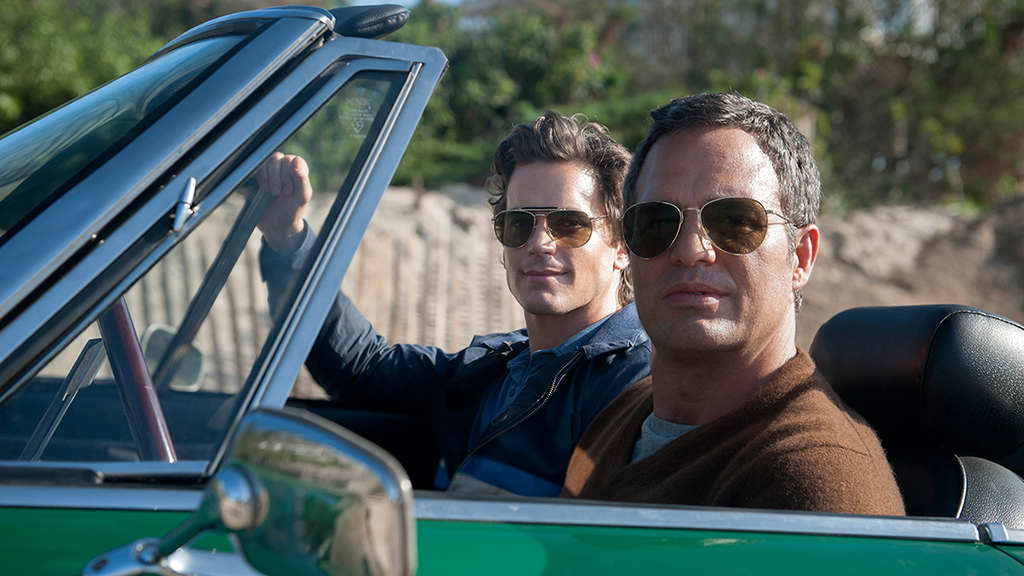
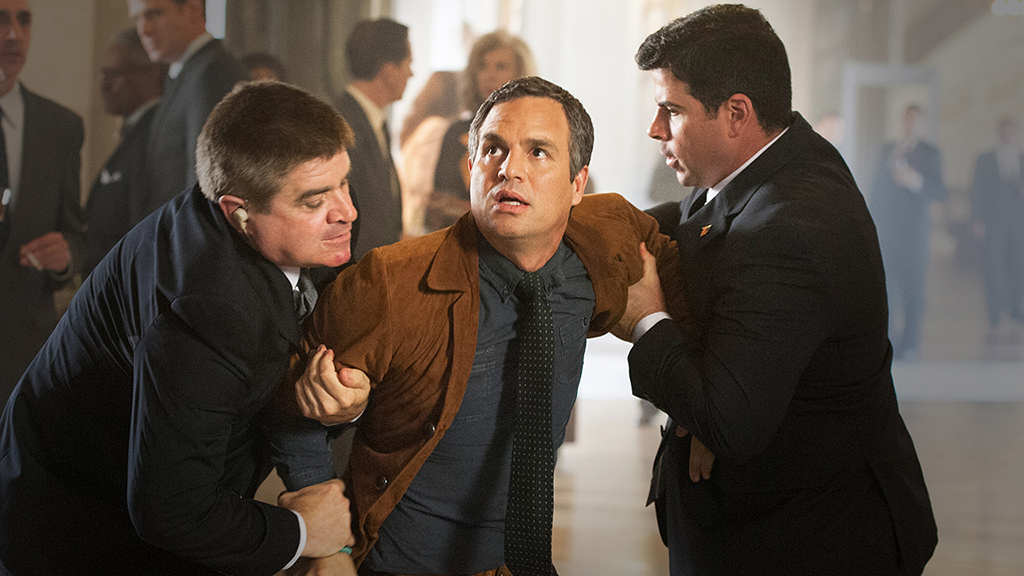
Julia Roberts plays Emma, a doctor and ally of Ned's with polio, who's just as angry as he is but incapable of doing much except prolonging the lives of the sick, who nearly all perish in her hospital rooms, with many of her own staff afraid to even to bring them their meals. Ned starts the Gay Men's Health Crisis, an organization intended to put pressure on the government to help the affected, but ends up doing many of the tasks that go along with consoling the dying men, much to Ned's protestations throughout the film. The other men involved include Taylor Kitsch, Jim Parsons and Joe Mantello, each of whom get their chance to shine with the dramatic monologues imbued throughout the script, even if Ryan Murphy can't help himself from going nuts with the camera during some of the speeches, thus robbing the actors of what should have been urgent, quiet spotlight moments for each of them. A major standout among this cast is Matt Bomer as Felix, a New York Times reporter Ned gets involved with, but who succumbs to the disease over the course of the film, and it's he who feels the most developed as a character and whose arc over the movie leaves you the most heartbroken. He goes from a confident, smart and charming young man with his whole future ahead of him, to a broken down vessel of wasted potential, making you feel as depressed and outraged as Ned and his friends at the generation of lives lost due to the public's indifference and lack of outcry. If the final scene between Felix and Ned doesn't pummel you into a submission of tears then you truly are made of stone.
Yet even with the powerful material and well cast actors on hand (although Julia Roberts is perhaps a bit distracting as she's made to look as self-consciously unglamorous as possible and her simple inability to disappear into a part proves to be unintentionally amusing when she goes zigzagging around hallways in her wheelchair), Ryan Murphy hamstrings the production with a schizophrenic camera style (especially during the opening Fire Island-set sequence) and poorly edited flashback scenes that often are distractions in and of themselves. It has the unfortunate effect of feeling like it should be a TV movie when HBO films are often a cut above that in effort, usually seeming like they should have easily been in theatrical release (such as last year's Behind the Candelabra, which had Steven Soderbergh's decidedly cool restraint behind the scenes). Still, the actors make it worthwhile, and the feeling and urgency of a subject matter that sometimes seems as though it's been unjustly forgotten in the days when HIV is now treatable and no longer a death sentence, make films that look back on those dark early days a much appreciated tribute to those whose lives were lost. It's a noble effort from all involved and a reminder of the necessity to have compassion and empathy for our fellow human beings, none of whom are ever as different from us as you might believe.
* * 1/2