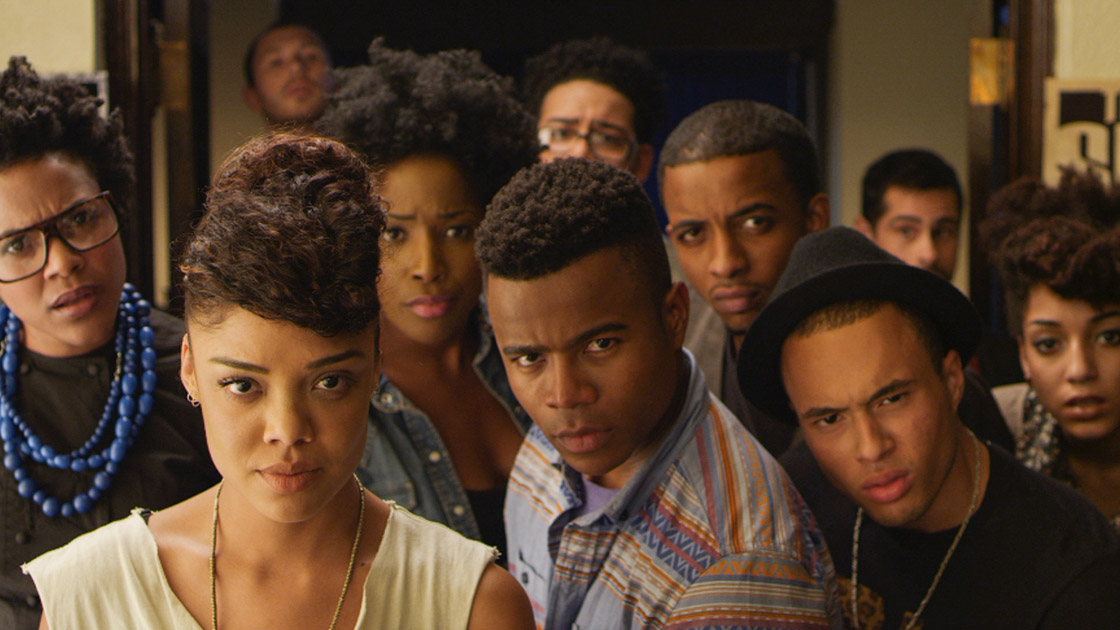
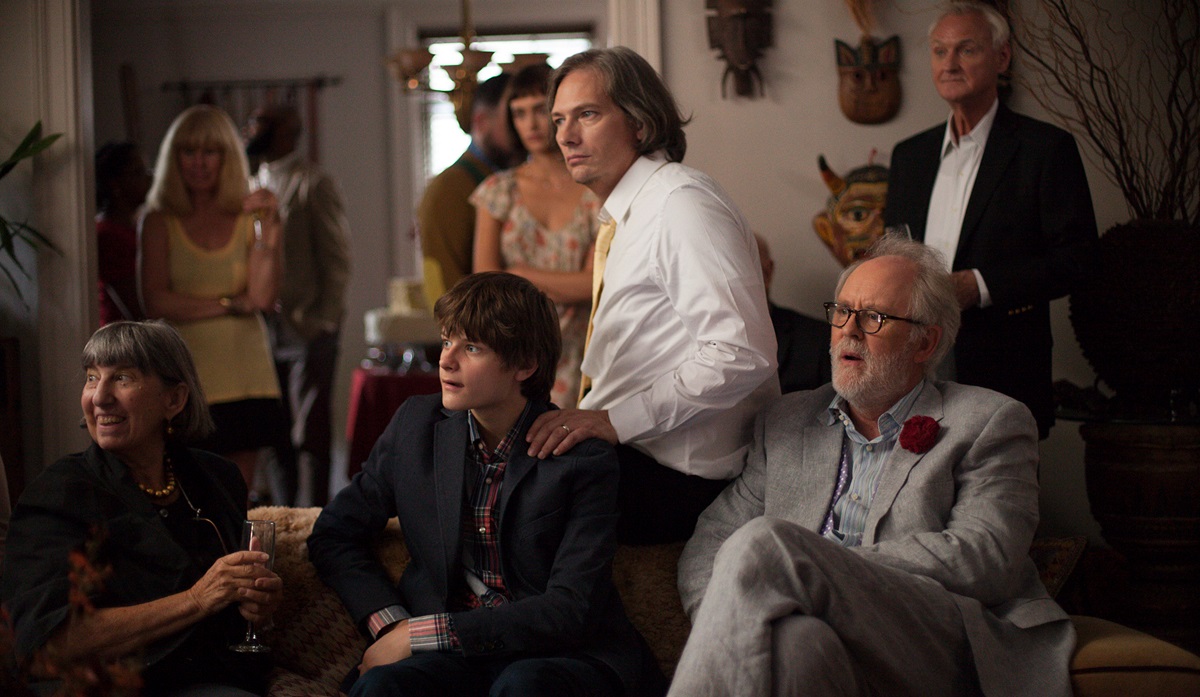
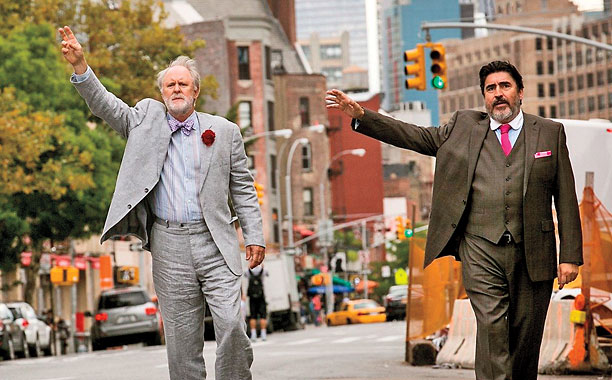
The movie is mixing up a lot of different issues that tackle racial identity head on, and that's what's interesting about it, but the points it tries to make are scattered at best. As a satire, it's not really funny enough or sharp enough to get one clear message across- although we know from the ending credits and various real life news stories that casual racism on campuses exists, in a troubling manner. What the movie does best is give us occasional insights into the issues of the assimilation of minorities in white society, especially in an environment where education and economic levels of all races are on the same level (for example, these are probably not the same kinds of immediate problems that residents of lower class, urban settings are facing on a day to day basis). The other film that deals with social issues is the wonderful Love is Strange, a quiet, moving, lovely little film about a couple, George and Ben (played by Alfred Molina and John Lithgow respectively), who've been together for 39 years, and decide to finally tie the knot in a low key ceremony in front of close friends and family. George and Ben live in a great apartment in New York City together, but after getting married, face a crisis when George is fired from his teaching job at a Catholic school (the archbishop having now been made aware of his marriage, even though everyone who worked with him knew he was gay), and the two can no longer afford a place to live.
Eventually they must turn to family to help them through this, and Ben is taken in by his nephew and his wife, while George stays with some much younger friends of theirs. The situation takes a page out of Make Way for Tomorrow by forcing a separation of the lifelong couple, but the details are slightly more contrived (it's never really made clear why they can't live together for example). Still, the acting from the two leads is sublime, and the careful interaction between the families so relaxed and natural, that you buy into everything they're selling. Ben and George are a real couple, one more devoted and more loyal to each other than any of a hundred straight couples you'd meet on the street. Ira Sachs, the director, seems to have a real personal connection to this story, which doesn't ever create false drama, even with a moody teenager living in the house of Ben's nephew, and Marisa Tomei shows again what a sympathetic and naturalistic presence she is onscreen as Ben's niece and a mother who has her own troubles within her marriage and family to confront. What you remember most from this film are the two men themselves, and the actors who bring them so much to life, and I was more touched by their complete and relaxed state of a life lived long and happily together than any other love story of the past year. It's all in the details, folks, and this one gets all the small things right, which add up to leave a very big impact.
Dear White People: * * 1/2 / Love is Strange: * * * 1/2